
NUREC featured at 2026 National Urban Extension Conference Keynote Panel and Innovative Research Workshop in Detroit, MI
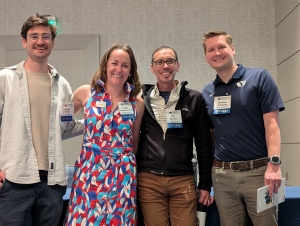
NUEC 26 Lunch Keynote: August Stolba (U Oregon), Maggie Anderson Fasy (WSU / NUREC), Pete Munoz (BioHabitats), Matt Arrington (BYU)
From May 11–14, 2026, the National Urban Research & Extension Center (NUREC) joined colleagues from across the country in Detroit, Michigan for the National Urban Extension Conference (NUEC). This year’s gathering brought together researchers, practitioners, and partners committed to advancing Extension’s role in urban communities—and NUREC was proud to contribute to both an innovative research panel and a keynote lunch panel.
We were especially grateful to be in the company of peers who share a commitment to collaboration, learning, and bold ideas for the future of urban Extension. A special thank you to conference chair Dr. Marie Rumenapp of Michigan State University for hosting such a dynamic and engaging event. The full conference agenda—including dozens of presenters and field trips exploring urban Detroit—offered rich opportunities to connect theory with practice and can be explored here.
Advancing Visible, Applied Research in Urban Extension
Across sessions and informal conversations, NUREC partners engaged with colleagues around a central theme: how Extension can “walk the talk” by making research more visible, experiential, and embedded within the communities we serve. Building Integrated Agriculture (BIA) emerged as a powerful framework for this work—bringing food production, green infrastructure, and educational programming directly into the built environment.
Panel discussions sparked meaningful dialogue about how Extension programs and research spaces can be transformed into living laboratories—places where food systems, water management, urban forestry, and youth development intersect. These spaces not only demonstrate innovative practices, but also create opportunities to test, adapt, and scale solutions in real time.
Innovative Research Panel: Bridging Research and Practice
NUREC contributed to the Innovative Research Panel, Bridging the GAp: Building Integrated Research & Extension Networks, featureing Dan Cronan (Washington State University), and Joshua Arnold (University of Massachusetts Amherst). This session highlighted NUREC’s mission to connect community priorities with the resources and reach of the land-grant university system. Central to this work are NUREC’s Knowledge & Practice Networks (KPNs), including:
- Urban Agriculture & Food Systems
- Built Environment
These networks create space for Extension professionals, researchers, and partners from local government and nonprofits to collaborate around shared challenges and opportunities. Through national webinars and convenings, KPNs are fostering dialogue on topics such as:
- Green infrastructure and nature-based solutions
- Food sovereignty and community-led systems
- Placemaking and community design
- Urban agriculture and community gardens
During the session, panelists also engaged participants in forward-looking discussion by posing key questions related to indicators of success, shared data sets, and priority research questions for urban Extension practitioners. These conversations surfaced important ideas about how Extension can better measure impact, align research efforts, and strengthen the evidence base for urban-focused programming.
We are excited to build on this momentum and are looking forward to using the notes and insights from this session to help inform future topics and collaborative opportunities within NUREC’s Knowledge & Practice Networks.
Keynote Lunch Panel: Cultivating Living Infrastructure
On Wednesday, May 13, Maggie Anderson Fasy (NUREC Program Manager) moderated the keynote lunch panel, Cultivating Living Infrastructure: Building Integrated Agriculture for Resilient Urban Futures.
This timely conversation brought together leaders from architecture, engineering, and plant science to explore how integrating agriculture into buildings and infrastructure can support more resilient, equitable urban systems:
- August Stolba (University of Oregon) shared emerging research on plant-responsive design and how architectural tools can better support food-producing buildings.
- Pete Muñoz (Biohabitats) highlighted the potential of nature-based solutions and the water-energy-food-ecology nexus in designing resilient infrastructure.
- Dr. Matt Arrington (Brigham Young University) discussed innovations in controlled environment agriculture and the role of technology in expanding access to food production.
Together, panelists illustrated how BIA can serve as a bridge between disciplines—connecting design, engineering, and Extension outreach to create multifunctional urban spaces that produce food, manage water, and support community well-being.
What Building Integrated Agriculture Means for Extension
For Extension systems, building integrated agriculture offers a compelling opportunity to demonstrate innovation in action. By embedding agricultural systems into schools, community centers, and public infrastructure, Extension can:
- Increase visibility and accessibility of research
- Engage diverse audiences through hands-on learning
- Integrate programming across disciplines (e.g., 4-H, Master Gardeners, urban forestry, water management)
- Strengthen partnerships with municipalities, nonprofits, and community organizations
To learn more about BIA and its implications for Extension, we invite you to start with this blog post by NUREC’s Jody Norman. You can also explore Jody’s ongoing interactive white paper series, which dives deeper into how these ideas are evolving in practice.
Looking Ahead
The conversations sparked in Detroit continue to inform NUREC’s work as we expand our Knowledge & Practice Networks and support innovative, community-centered research across the country.
If you’re interested in engaging with this work, we encourage you to connect with NUREC’s KPNs and explore upcoming opportunities to collaborate. And be sure to mark your calendar for the Urban Food Systems Symposium, where many of these conversations around food, infrastructure, and urban resilience will continue to grow.
Together, we are exploring what’s possible when Extension not only studies change—but helps build it.


